Key Takeaways
- Up to 15% of the general population is B12 deficient, rising to 20% or more in adults over 60 (NIH Office of Dietary Supplements, 2023)
- B12 injections deliver 1,000 mcg at nearly 100% bioavailability, while a 1,000 mcg oral tablet delivers only about 10 mcg through passive diffusion
- Neurological damage from B12 deficiency can become irreversible if left untreated, making early detection and treatment critical
- Methylcobalamin is the bioactive form that crosses the blood-brain barrier most readily and requires no conversion in the body
- Patients on metformin, proton pump inhibitors, or GLP-1 weight loss medications are at elevated risk for B12 depletion
- Most patients report increased energy within 24-72 hours of their first injection at Vitality by PACS in Alexandria, VA
What Is Vitamin B12 and Why Does It Matter?
Vitamin B12 (cobalamin) is an essential water-soluble vitamin that serves as a cofactor in two critical biochemical pathways. The first pathway converts methylmalonyl-CoA to succinyl-CoA, which drives energy metabolism in the mitochondria and synthesizes the myelin sheath that insulates nerve fibers. The second pathway converts homocysteine to methionine, a reaction essential for DNA synthesis, red blood cell production, and nervous system maintenance.
B12 deficiency is far more common than most patients realize. The NIH Office of Dietary Supplements estimates that up to 15% of the general population may be B12 deficient, with prevalence rising above 20% in adults over age 60 (NIH, 2023). The Framingham Offspring Study found that 39% of participants had plasma B12 levels in the low-normal range, a subclinical zone where neurological symptoms can already develop (American Journal of Clinical Nutrition, 2000).
At Vitality by PACS in Alexandria, VA, vitamin B12 injections are one of our most requested treatments. The reason is straightforward: injections deliver the vitamin directly into muscle tissue and then the bloodstream, bypassing the complex absorption pathway that fails in millions of Americans.
How B12 Absorption Works and Why It Fails
Understanding why vitamin B12 injections outperform oral supplements requires understanding the uniquely complex four-step absorption process that oral B12 must survive.
Step 1: Acid liberation. Stomach acid and pepsin must first separate B12 from the food proteins it is bound to. Any condition that reduces stomach acid, including aging, proton pump inhibitor use, or H. pylori infection, impairs this step.
Step 2: Intrinsic factor binding. Free B12 binds to intrinsic factor (IF), a specialized glycoprotein produced by parietal cells in the stomach lining. Patients with pernicious anemia produce antibodies that destroy parietal cells, eliminating intrinsic factor production entirely.
Step 3: Ileal transport. The B12-intrinsic factor complex travels to the terminal ileum, the last section of the small intestine, where specific cubam receptors absorb it into the bloodstream.
Step 4: Cellular delivery. Absorbed B12 binds to transcobalamin II in the blood and is delivered to target cells throughout the body.
Each step is a potential failure point. The intrinsic factor pathway has a hard ceiling: it can absorb only about 1.5 mcg per meal regardless of how much B12 you swallow. Passive diffusion allows absorption of roughly 1% of large oral doses. A 1,000 mcg oral B12 tablet therefore delivers approximately 10 mcg to the bloodstream. A 1,000 mcg intramuscular injection delivers the full dose at nearly 100% bioavailability.
Signs and Symptoms of B12 Deficiency
B12 deficiency develops gradually over months or years because the liver stores 2-5 mg of B12, enough for two to five years of normal use. By the time symptoms appear, deficiency may already be advanced. Recognizing the warning signs early is essential because neurological damage from prolonged B12 deficiency can become permanent.
Neurological Warning Signs
Peripheral neuropathy, tingling or numbness in the hands and feet, is often the earliest neurological symptom. Patients may also experience difficulty with balance and coordination, cognitive changes described as brain fog or difficulty concentrating, and depression or mood instability. The New England Journal of Medicine has published case studies of patients with severe B12 deficiency presenting with symptoms mimicking multiple sclerosis or dementia, which resolved after B12 repletion but only when caught before irreversible nerve damage occurred (NEJM, 2013).
Blood and Energy Symptoms
B12 deficiency causes megaloblastic anemia, a condition where red blood cells become abnormally large and inefficient at carrying oxygen. Patients experience persistent fatigue, weakness, shortness of breath with exertion, and pale or jaundiced skin. A complete blood count (CBC) showing elevated mean corpuscular volume (MCV above 100 fL) is a hallmark lab finding.
Other Symptoms
Glossitis (a sore, swollen tongue), mouth ulcers, muscle weakness, and visual disturbances can also indicate B12 deficiency. These symptoms overlap with many other conditions, which is why B12 deficiency is frequently missed or misdiagnosed.
Five Populations at Highest Risk for B12 Deficiency
Certain groups face elevated risk due to reduced intake, impaired absorption, or increased demand. If you fall into any of these categories, a vitamin B12 injection may be the most reliable way to maintain adequate levels.
1. Adults Over 50
Atrophic gastritis affects 10-30% of older adults, progressively reducing stomach acid production and impairing B12 liberation from food proteins (CDC, 2022). The Institute of Medicine specifically recommends that adults over 50 obtain their B12 from supplements or fortified foods rather than relying on dietary sources alone, because food-bound B12 absorption declines with age even when total B12 intake is adequate.
2. Vegans and Strict Vegetarians
B12 exists almost exclusively in animal products including meat, fish, dairy, and eggs. A meta-analysis published in Nutrition Reviews (2014) found that up to 62% of pregnant vegetarians and 90% of vegans who did not supplement had biochemical evidence of B12 deficiency. Plant-based diets provide zero reliable B12 without supplementation or fortified foods.
3. Patients Taking Common Medications
Several widely prescribed medications interfere with B12 absorption. Proton pump inhibitors (omeprazole, pantoprazole, esomeprazole) reduce the stomach acid needed for step one. H2 receptor blockers (famotidine) have a similar but milder effect. Metformin, the most prescribed diabetes medication worldwide, reduces B12 absorption by 10-30% according to a 2016 meta-analysis in The Journal of Clinical Endocrinology and Metabolism. The American Diabetes Association now recommends periodic B12 monitoring for all patients on long-term metformin.
4. Patients with Gastrointestinal Conditions
Crohn's disease affecting the terminal ileum directly compromises the absorption site. Celiac disease damages the intestinal lining. Small intestinal bacterial overgrowth (SIBO) allows bacteria to consume B12 before the host can absorb it. Patients with a history of bariatric surgery, particularly gastric bypass, lose both acid-producing capacity and ileal absorptive surface.
5. Patients on GLP-1 Weight Loss Medications
Patients taking semaglutide or tirzepatide for medical weight loss eat significantly less food and experience slowed gastric emptying, both of which reduce B12 absorption over time. At Vitality by PACS, we frequently recommend B12 injections as a complement to our GLP-1 weight loss programs to prevent deficiency during caloric restriction.
Types of B12 Injections and Proper Dosages
At Vitality by PACS, we offer intramuscular B12 injections using the most bioactive forms available. The choice of form depends on the clinical scenario.
Methylcobalamin
Methylcobalamin is the naturally occurring, bioactive coenzyme form of B12 that requires no conversion in the body. It participates directly in the methionine synthase reaction and crosses the blood-brain barrier more readily than other forms, making it the preferred choice for patients with neurological symptoms. Typical injection dose: 1,000 to 5,000 mcg intramuscularly.
Hydroxocobalamin
Hydroxocobalamin is a naturally occurring form with a longer half-life than methylcobalamin, retained in the body for several weeks rather than days. The World Health Organization and the British National Formulary list hydroxocobalamin as the preferred form for treating established deficiency. Its extended retention makes it ideal for patients who want less frequent dosing. Typical injection dose: 1,000 mcg intramuscularly.
Cyanocobalamin
Cyanocobalamin is the synthetic form found in most oral supplements. While effective, it requires two enzymatic conversion steps before becoming biologically active. We generally prefer methylcobalamin or hydroxocobalamin for injectable use due to their superior bioavailability and direct biological activity.
Recommended Injection Frequency
| Clinical Scenario | Loading Phase | Maintenance Phase |
|---|---|---|
| Established deficiency | 1,000 mcg 2-3x/week for 2 weeks, then weekly for 4-8 weeks | 1,000 mcg monthly |
| General wellness and energy | Not required | 1,000-2,500 mcg monthly or biweekly |
| High-risk populations | Based on lab results | 1,000 mcg monthly indefinitely |
| GLP-1 medication patients | Not typically required | 1,000 mcg monthly during treatment |
Proven Benefits of B12 Injections
Patients who receive regular B12 injections at our Alexandria, VA clinic report measurable improvements across multiple health domains. The following benefits are supported by published clinical evidence.
Energy and Mitochondrial Metabolism
B12 is essential for the citric acid cycle and mitochondrial electron transport chain, the biochemical pathways that produce ATP (cellular energy). Patients with even subclinical deficiency often describe dramatic improvements in energy levels within 48 to 72 hours of their first injection. A study in BMC Family Practice (2020) found that B12 injections improved fatigue scores even in patients with serum B12 levels in the normal range, suggesting that standard lab reference ranges may underestimate optimal levels.
Cognitive Function and Brain Health
A 2012 study in Neurology found that patients with higher B12 levels had significantly less brain volume loss (atrophy) over a five-year period. B12's role in myelin synthesis protects the insulating sheath around nerve fibers, while its regulation of homocysteine metabolism reduces a known risk factor for cognitive decline. The Oxford Project to Investigate Memory and Ageing (OPTIMA) demonstrated that B vitamin supplementation slowed brain atrophy by 30% in patients with elevated homocysteine (PLoS ONE, 2010).
Mood and Mental Health
B12 is required for the synthesis of serotonin, dopamine, and norepinephrine. A 2017 meta-analysis in the Journal of Psychopharmacology found that B12 supplementation improved depressive symptoms, particularly in patients with elevated homocysteine levels. The mechanism is direct: B12 deficiency impairs methylation reactions needed to produce S-adenosylmethionine (SAMe), a methyl donor critical for neurotransmitter synthesis.
Red Blood Cell Production
B12 corrects megaloblastic anemia by restoring normal DNA synthesis in red blood cell precursors in the bone marrow. Patients typically notice improved exercise tolerance and reduced breathlessness within two to four weeks of beginning treatment. The reticulocyte count, a measure of new red blood cell production, typically rises within 3-5 days of the first injection, confirming bone marrow response.
Nervous System Repair
For patients with peripheral neuropathy from B12 deficiency, injections can halt progression and in many cases reverse symptoms when treatment begins early. A 2019 study in Neurological Sciences documented nerve conduction velocity improvements in 72% of B12-deficient patients who received intramuscular injections for 12 weeks.
B12 Injections vs. Oral B12 Supplements
The injection-versus-oral debate has a nuanced answer. For patients with fully intact absorption pathways and mild supplementation needs, high-dose oral B12 at 1,000 to 2,000 mcg daily can maintain adequate serum levels because passive diffusion absorbs roughly 1% of the dose. However, B12 injections are clearly superior in several clinical scenarios.
| Factor | B12 Injection | Oral B12 Supplement |
|---|---|---|
| Bioavailability | Nearly 100% | 1-2% of dose (passive diffusion) |
| Speed to peak levels | 1-2 hours | 6-8 hours |
| Dependence on absorption | None | Requires stomach acid, intrinsic factor, ileal function |
| Compliance | 1 injection/month | Daily pill |
| Reliability for deficiency | Gold standard | Inadequate if absorption is impaired |
| Peak serum concentration | Significantly higher | Lower and variable |
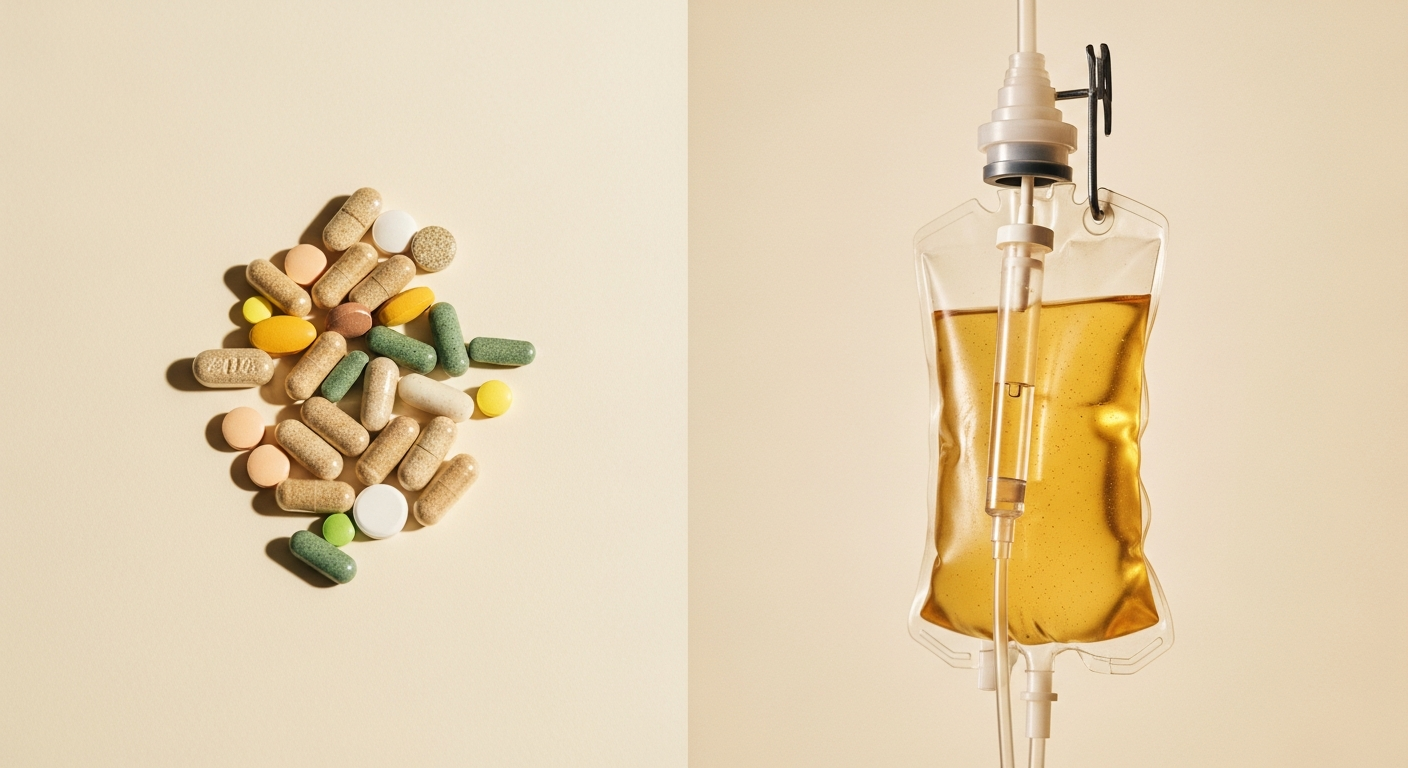
For patients interested in broader nutrient optimization beyond B12 alone, our IV therapy treatments combine B12 with other B-complex vitamins, magnesium, vitamin C, and amino acids in a single 30-45 minute session. Learn more about how IV therapy compares to oral supplements.
Frequently Asked Questions
How quickly will I feel the effects of a B12 injection?
Many patients report increased energy within 24 to 72 hours of their first injection. Peak serum B12 levels occur within one to two hours of an intramuscular injection. For patients with established deficiency, full neurological recovery may take several weeks to months of consistent treatment depending on the severity and duration of the deficiency. At Vitality by PACS in Alexandria, VA, we monitor your B12 levels and symptoms at follow-up visits to confirm response.
Are B12 injections painful?
B12 injections are administered intramuscularly, typically in the deltoid muscle of the upper arm. The injection takes only a few seconds and most patients describe it as a mild pinch comparable to a flu shot. There is no downtime or activity restriction afterward. Our nursing staff at Vitality by PACS uses the smallest effective needle gauge to maximize comfort.
Can you get too much B12 from injections?
B12 is a water-soluble vitamin, and excess amounts are excreted through the kidneys. The NIH has not established an upper tolerable intake level for B12 because toxicity from supplementation has not been documented in the clinical literature (NIH, 2023). However, we always recommend B12 injections under medical supervision to ensure appropriate dosing and to monitor for the rare possibility of allergic reaction to the injection formulation.
Who should get B12 injections instead of oral supplements?
Injections are the preferred route for patients over 50 with atrophic gastritis, patients with pernicious anemia, anyone taking PPIs or metformin long-term, patients with Crohn's disease or celiac disease, post-bariatric surgery patients, vegans with documented deficiency, and patients on GLP-1 medications with reduced food intake. If you are unsure whether injections are right for you, find a location to schedule a consultation with our clinical team.
Medically reviewed by the Vitality by PACS clinical team. Last updated 2026-04-06.