Key Takeaways
- IV therapy achieves 100% bioavailability by definition because nutrients enter the bloodstream directly, bypassing all digestive barriers
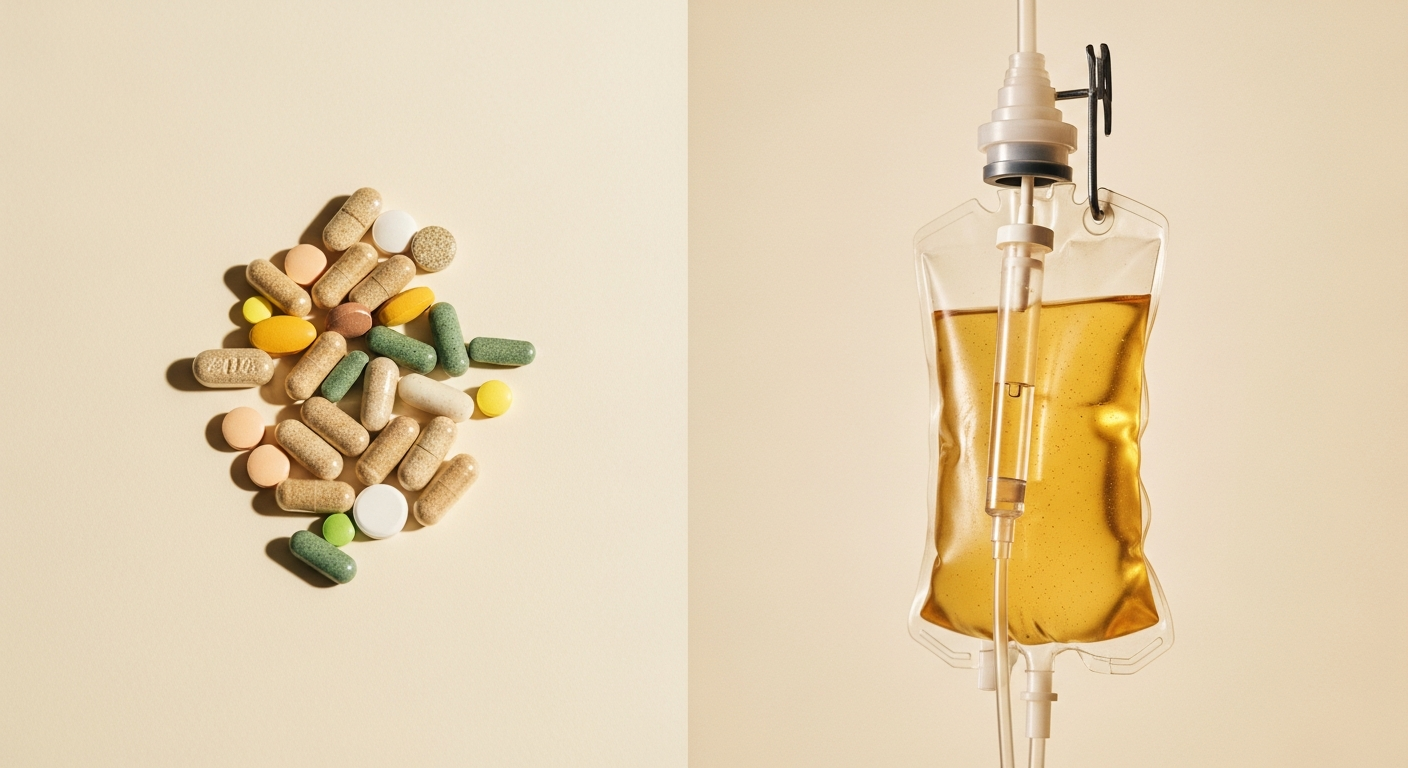
- Oral supplements lose 80-90% of their dose to gastric degradation, transport saturation, and first-pass liver metabolism
- IV vitamin C at 1,250 mg produces plasma levels 6.6 times higher than the same oral dose (NIH, Annals of Internal Medicine, 2004)
- Oral glutathione at 250 mg/day failed to raise blood levels after four weeks, while IV glutathione achieves immediate increases (European Journal of Nutrition, 2015)
- The optimal strategy combines daily oral supplements for maintenance with periodic IV therapy for therapeutic-level dosing
- Americans spend over $50 billion annually on supplements, yet absorption limitations mean much of that investment never reaches target cells
The Bioavailability Problem with Oral Supplements
Americans spend over $50 billion annually on dietary supplements, according to the National Institutes of Health (NIH, 2024). Yet a growing body of pharmacokinetic evidence shows that most of that investment fails to reach the cells that need it. The core issue is bioavailability: the percentage of an ingested nutrient that actually enters systemic circulation and becomes available for biological use.
When you swallow a vitamin tablet, it must survive a gauntlet of five biological barriers before it can do anything useful. Each barrier reduces the effective dose. By the time the nutrient enters your bloodstream, only 10-20% of the original amount remains for most water-soluble vitamins. IV therapy at Vitality by PACS in Alexandria, VA eliminates every one of these barriers by delivering nutrients directly into the vein.
The Five Barriers That Destroy Oral Supplement Absorption
Understanding exactly where oral supplements fail explains why IV therapy absorption rates are so dramatically superior. Each step in the digestive process acts as a bottleneck that reduces the dose reaching your bloodstream.
Barrier 1: Dissolution Failure
The tablet or capsule must first dissolve in the stomach's acidic environment at a pH of 1.5 to 3.5. This step is not trivial. A 2019 study published in JAMA Internal Medicine tested 13 popular supplement brands and found that some tablets failed to dissolve within the standard testing period entirely. Gummy vitamins, despite their popularity, have even more variable dissolution profiles because the gelatin matrix resists breakdown.
Barrier 2: Gastric Acid Degradation
Many nutrients are chemically degraded by stomach acid before they reach the small intestine. Vitamin C (ascorbic acid) begins oxidizing in acidic environments. Probiotics are largely destroyed. B vitamins undergo partial degradation. Only the fraction that survives acid exposure advances to intestinal absorption.
Barrier 3: Transport Saturation in the Small Intestine
Nutrients must cross the intestinal epithelium using either active transport (carrier-mediated, which saturates at specific doses) or passive diffusion (concentration-dependent and inefficient). The critical limitation is that active transport mechanisms have a hard maximum capacity.
For vitamin C, the intestinal transporter SVCT1 saturates at oral doses above approximately 200 mg. Dr. Mark Levine at the NIH published landmark pharmacokinetic data in the Annals of Internal Medicine (2004) demonstrating the ceiling effect:
- A 200 mg oral dose produces a plasma concentration of approximately 70 micromol/L
- A 1,250 mg oral dose raises plasma levels to only 135 micromol/L, less than double despite a sixfold dose increase
- An IV dose of 1,250 mg raises plasma levels to approximately 885 micromol/L, which is 6.6 times higher than the same oral dose
This sigmoidal absorption curve means that taking more pills does not proportionally increase the nutrient in your blood. There is a pharmacological ceiling that oral dosing cannot breach.
Barrier 4: First-Pass Liver Metabolism
After absorption from the intestine, nutrients travel through the portal vein to the liver before entering systemic circulation. The liver metabolizes a significant portion of many nutrients during this first pass. Glutathione is the most dramatic example: it is almost entirely broken down into its constituent amino acids (cysteine, glycine, and glutamate) during first-pass hepatic metabolism.
A 2015 study in the European Journal of Nutrition confirmed that oral glutathione supplementation at 250 mg/day failed to significantly raise blood glutathione levels after four weeks of daily use. IV glutathione at 600-2,000 mg bypasses the liver entirely and achieves immediate, substantial increases in both plasma and intracellular glutathione concentrations.
Barrier 5: Systemic Distribution Losses
Only after surviving dissolution, acid exposure, transport limitations, and liver metabolism does the remaining fraction enter systemic circulation. By this point, 80-90% of the original dose of most water-soluble vitamins has been lost. The nutrient that remains must then distribute to target tissues, further diluting its effective concentration.
The Absorption Math: What You Actually Get
The following comparison table presents published bioavailability data for the nutrients most commonly delivered via IV therapy at Vitality by PACS. These figures come from pharmacokinetic studies in peer-reviewed journals, not marketing estimates.
| Nutrient | Oral Bioavailability | IV Bioavailability | What 1,000 mg Oral Delivers | What 1,000 mg IV Delivers |
|---|---|---|---|---|
| Vitamin C | 15-30% (dose-dependent, NIH 2004) | 100% | 150-300 mg | 1,000 mg |
| Magnesium | 20-50% (form-dependent) | 100% | 200-500 mg | 1,000 mg |
| Glutathione | Less than 5% (first-pass destruction) | 100% | Less than 50 mg | 1,000 mg |
| Vitamin B12 | 1-2% passive diffusion at high doses | 100% | 10-20 mcg from 1,000 mcg | 1,000 mcg |
| Zinc | 20-40% (form-dependent) | 100% | 200-400 mg | 1,000 mg |
| B-Complex | 20-50% (varies by component) | 100% | Variable | Full dose |
The gap between oral and IV delivery is most dramatic for nutrients with saturable transport mechanisms (vitamin C), extensive first-pass metabolism (glutathione), or complex absorption requirements (vitamin B12). For these nutrients, IV therapy is not a marginal improvement. It is a fundamentally different pharmacological approach.
How IV Therapy Eliminates Every Absorption Barrier
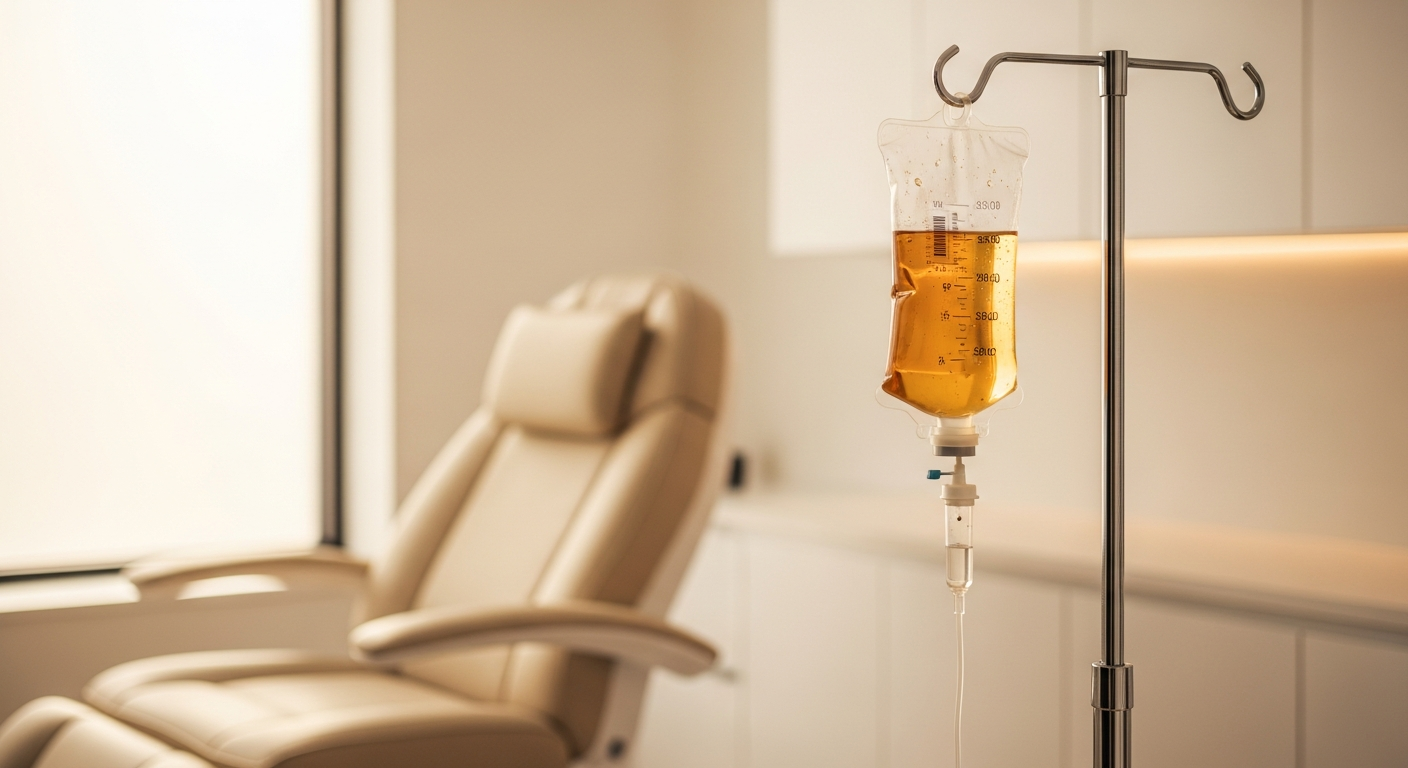
Intravenous administration bypasses every bottleneck in the oral absorption pathway. The contrast is absolute.
No dissolution required. Nutrients are already in sterile aqueous solution, ready for immediate systemic delivery. There is no dependence on stomach acid or tablet formulation quality.
No gastric degradation. The stomach is bypassed entirely. Acid-sensitive nutrients like vitamin C and B vitamins reach the bloodstream in their intact, active form.
No transport saturation. Without intestinal carrier proteins as gatekeepers, there is no absorption ceiling. IV vitamin C at 10,000-25,000 mg achieves plasma concentrations with documented antimicrobial and immune-enhancing properties that are pharmacologically impossible through any oral dose (Padayatty et al., Annals of Internal Medicine, 2004).
No first-pass metabolism. Nutrients enter systemic circulation directly without passing through the liver first. This is why IV glutathione is effective while oral glutathione is largely not.
Immediate peak concentration. Peak plasma levels are achieved within minutes of starting the infusion, compared to two to four hours for oral supplements. For patients who need rapid nutrient repletion, such as during acute illness or before athletic competition, this speed difference is clinically meaningful.
This is why IV therapy achieves 100% bioavailability by pharmacological definition. Every milligram in the IV bag reaches the bloodstream. This is not a marketing claim; it is a foundational principle of pharmacokinetics taught in every medical school and pharmacy program.
Five Clinical Scenarios Where IV Therapy Absorption Matters Most
For a generally healthy person eating a balanced diet, the difference between 30% and 100% absorption of a daily multivitamin may not produce noticeable clinical effects. But specific scenarios exist where the IV absorption advantage becomes medically significant.
Acute Illness and Immune Challenges
When the immune system fights an infection, demand for vitamin C, zinc, and glutathione spikes dramatically. The NIH reports that plasma vitamin C levels can drop by 50% or more within days of acute illness (NIH, 2021). Oral replacement cannot keep pace because of SVCT1 transport saturation. IV vitamin C at 10,000-25,000 mg achieves the antimicrobial plasma concentrations needed to support immune function during acute illness.
Athletic Performance and Recovery
Athletes under heavy training loads experience increased oxidative stress and accelerated micronutrient depletion through sweat and elevated metabolic demand. A 2020 study in Nutrients found that athletes frequently have suboptimal magnesium status despite oral supplementation, partly because exercise increases renal magnesium excretion by 10-20%. IV delivery ensures that replenishment actually reaches depleted muscle tissue at therapeutic concentrations.
Chronic Fatigue and Malabsorption Disorders
Patients with Crohn's disease, celiac disease, irritable bowel syndrome, SIBO, or a history of bariatric surgery cannot absorb nutrients effectively regardless of what they eat or supplement with. For these patients, IV therapy is not a wellness luxury but a clinical necessity. At Vitality by PACS in Alexandria, VA, we see patients who have taken oral supplements for years with minimal improvement and then experience dramatic differences after their first IV infusion.
Detoxification and Antioxidant Support
Glutathione, the body's master antioxidant responsible for neutralizing free radicals and supporting liver detoxification, provides the clearest example of the oral-to-IV absorption gap. Oral glutathione is broken down in the gut and liver before it can raise systemic levels. IV glutathione, delivered as a push immediately following an IV drip, raises intracellular glutathione concentrations within minutes, supporting both phase I and phase II hepatic detoxification pathways.
Weight Loss Medication Support
Patients taking GLP-1 medications like semaglutide or tirzepatide for medical weight loss eat significantly less food, which reduces total nutrient intake. Slowed gastric emptying, a therapeutic effect of these medications, can further impair oral supplement absorption. IV therapy and vitamin injections provide a reliable nutrient delivery pathway that is independent of food intake and gastric motility.
When Oral Supplements Are Still the Right Choice
IV therapy does not replace oral supplements. It complements them. For daily maintenance of baseline nutrition in patients with normal digestive function, oral vitamins and minerals serve an important and cost-effective role. The following guidelines help patients maximize their oral supplement absorption.
Choose bioavailable forms. Methylfolate is superior to folic acid. Methylcobalamin is superior to cyanocobalamin. Chelated magnesium glycinate absorbs better than magnesium oxide. The form matters as much as the dose.
Take fat-soluble vitamins with fat. Vitamins A, D, E, and K require dietary fat for absorption. A 2015 study in the Journal of the Academy of Nutrition and Dietetics found that taking vitamin D with the largest meal of the day increased absorption by 50% compared to taking it on an empty stomach.
Split vitamin C doses. Because SVCT1 transport saturates above 200 mg, splitting vitamin C into three or four smaller doses throughout the day produces higher total absorption than a single large dose.
Avoid calcium with iron. Calcium and iron compete for the same intestinal transporters. Taking them at separate meals improves absorption of both minerals.
The optimal strategy for most patients combines daily oral maintenance supplements with periodic IV therapy sessions for therapeutic-level dosing. Think of oral supplements as nutritional insurance and IV therapy as targeted clinical intervention when you need maximum nutrient delivery.
What an IV Therapy Session Looks Like at Vitality by PACS
If you have never experienced IV therapy, here is what to expect at our clinic in Alexandria, VA. The entire process takes approximately one hour.
A licensed clinical team member conducts a brief health intake covering your medical history, current medications, and wellness goals. Based on your intake, we recommend a formulation from our menu of 10 IV drips targeting immunity, energy, recovery, beauty, and more.
A registered nurse inserts a small IV catheter, typically 20-22 gauge, into a vein in your forearm or hand. The insertion takes about 15 seconds and feels like a brief pinch. The 30-to-45-minute infusion follows, during which you can relax, read, or work on your phone. An optional glutathione push at the end adds 5-10 minutes.
There is no downtime. You leave the clinic and resume normal activities immediately. Most patients report noticeable improvements in energy, mental clarity, and overall well-being within hours. For a comprehensive walkthrough of your first visit, read our guide on what to expect during IV therapy.
Frequently Asked Questions
If IV therapy absorption is so much better, why do doctors still recommend oral supplements?
Oral supplements are convenient, affordable, and clinically sufficient for daily maintenance in patients with normal digestive absorption. IV therapy is most valuable when you need therapeutic-level nutrient dosing, have absorption limitations from medications or GI conditions, or want rapid results for time-sensitive goals like illness recovery or athletic performance. The two approaches are complementary strategies, not competing alternatives.
How often should I get IV therapy instead of just taking oral supplements?
For most patients, a monthly or biweekly IV session combined with daily oral supplementation provides optimal results. Patients with malabsorption conditions, chronic fatigue, or higher nutrient demands from athletic training may benefit from weekly infusions. Our clinical team at Vitality by PACS recommends a personalized schedule based on your lab results, health history, and wellness goals.
Which nutrients have the largest absorption gap between oral and IV delivery?
Vitamin C, glutathione, and vitamin B12 show the most dramatic differences. IV vitamin C achieves plasma levels 6.6 times higher than the same oral dose. Oral glutathione has less than 5% bioavailability due to first-pass liver destruction. Oral B12 delivers roughly 1% of its dose through passive diffusion. Magnesium and zinc also show significant oral-to-IV gaps, particularly in patients taking medications that impair mineral absorption.
Is the "100% absorption" claim actually backed by science?
Yes. Intravenous administration achieves 100% bioavailability by pharmacological definition because the nutrient is delivered directly into the bloodstream. This is not a marketing claim. It is the reference standard in pharmacokinetics against which all other routes of administration (oral, sublingual, intramuscular, transdermal) are measured. This principle is taught in every medical school pharmacology course and is documented in Goodman and Gilman's The Pharmacological Basis of Therapeutics, the standard pharmacology textbook. Find a location to experience the difference.
Medically reviewed by the Vitality by PACS clinical team. Last updated 2026-04-06.